How much does pot light installation cost in Hamilton?
+
The cost to install pot lights depends on how many lights you need,
the type of ceiling, whether there is attic access above, and whether
you want dimmers or smart controls. Installing pot lights in a new or
open ceiling during a renovation costs less per light than adding them
to a finished ceiling. We give you a fixed price after reviewing the
space, so you know the full pot light cost before work starts.
Can you install pot lights in an existing ceiling without attic access?
+
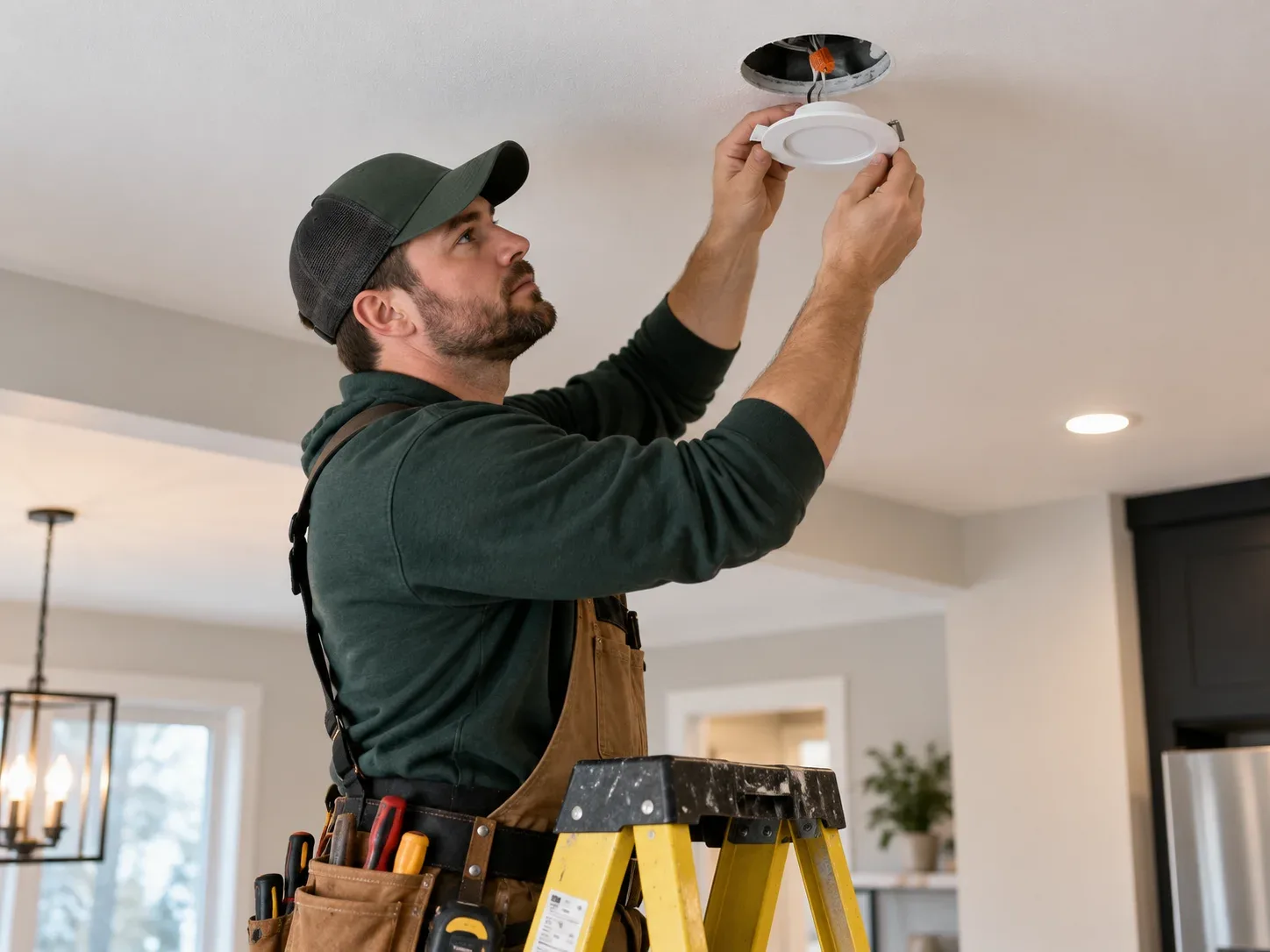
Yes. Slim LED pot lights, also called wafer or canless lights, need
very little space above the ceiling, so they can be installed in
finished ceilings, basements and between floors. Wiring is fished
between ceiling joists through small openings, which keeps drywall
repairs to a minimum. In insulated ceilings, we use IC-rated fixtures
that can safely touch insulation.
How many pot lights do I need for a room?
+
It depends on the room size, ceiling height and how bright you want the
space to be. As a general guide, pot light spacing is roughly half the
ceiling height apart, so with a standard 8-foot ceiling lights are
placed about 4 feet apart, with less space in kitchens and work areas
and more in living rooms and bedrooms. We plan a pot light layout for
each room so the light is even, without dark corners or glare.
Why are my LED lights flickering?
+
LED lights flickering is most often caused by an old dimmer that is
not designed for LEDs, a mix of different bulbs or fixtures on the
same dimmer, or a loose connection in the switch or fixture. Replacing
the dimmer with an LED-compatible dimmer usually solves the problem.
If lights flicker throughout the house or when large appliances turn
on, the cause may be in the panel or wiring and should be checked by
an electrician.
Why do my pot lights turn off by themselves?
+
Older halogen pot lights have built-in thermal protection that shuts
the light off when it overheats. This usually happens when insulation
is packed around a non-IC fixture or when the bulb wattage is too high.
The light comes back on after it cools down, but repeated overheating
is a fire risk. Replacing old fixtures with LED pot lights solves the
problem because they run much cooler.
What is the difference between low voltage and line voltage landscape lighting?
+
Low voltage landscape lighting runs on 12 volts through a transformer
plugged into an outdoor outlet. It is safer around gardens, easier to
adjust and the most popular choice for pathway lights and garden
lighting. Line voltage lighting runs on 120 volts, is used for
brighter fixtures like floodlights and post lights, and requires
cable buried at code depth or in conduit. We help you choose the right
system for your yard and install the transformer, timer or photocell controls.
Can you replace a light fixture with a ceiling fan?
+
Yes, in most cases. A ceiling fan is heavier than a light fixture and
moves while running, so the ceiling box must be fan-rated and securely
mounted to the framing. Many standard light boxes are not designed for
a fan. During ceiling fan installation we check the box and replace it
if needed, and we can add a separate wall control for the fan and light.
Do I need an ESA permit for lighting installation in Ontario?
+
Most new lighting work in Ontario requires an ESA notification,
including new pot lights, new lighting circuits, outdoor lighting and
new switch locations. Some simple like-for-like replacements may not.
When a licensed electrical contractor does the work, they file the
notification with the Electrical Safety Authority and arrange the
inspection if one is required.
Can soffit pot lights be controlled with a timer?
+
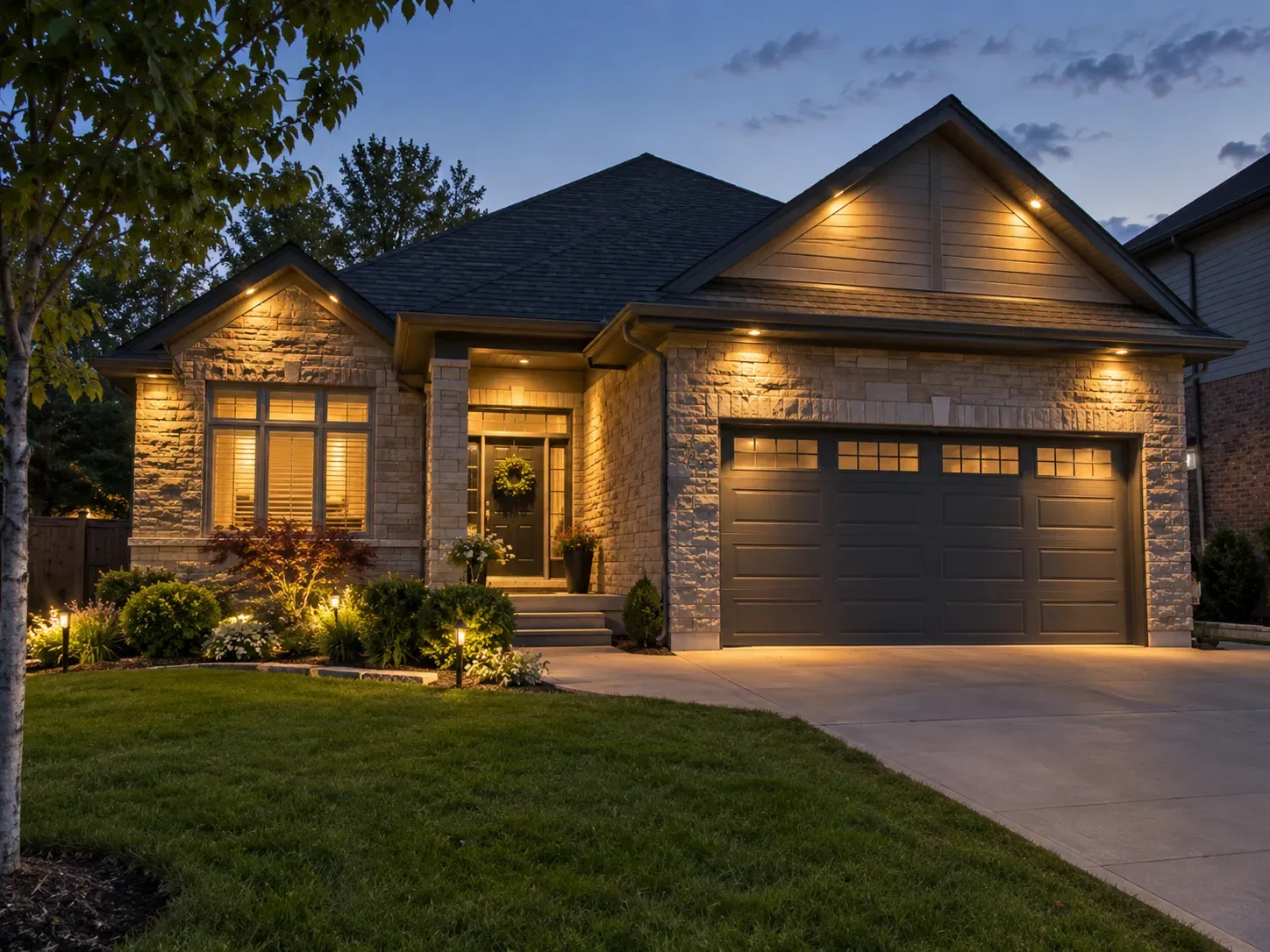
Yes. Soffit lighting and exterior pot lights can be connected to a
regular switch, a timer, a photocell that turns lights on at dusk, or
a smart switch you control from your phone. For soffits, we use
wet-rated LED fixtures designed for exterior use, so they hold up to
Hamilton's rain, snow and temperature changes.